Understanding moon phases offers more than just celestial observation; it provides a framework for recognizing natural cycles, informing seasonal planning, and engaging with a topic that consistently draws significant public interest across various demographics. For content creators, publishers, and niche marketers, grasping the basics of lunar cycles means identifying evergreen content opportunities, tapping into predictable search trends, and aligning content calendars with natural rhythms. This guide breaks down the fundamental concepts of moon phases, explaining their mechanics and practical implications for anyone looking to connect with audiences interested in astronomy, nature, culture, or seasonal activities.
What Are Moon Phases?
Moon phases describe the different appearances of the Moon as seen from Earth, which are determined by the changing angles of the Sun's illumination on its surface. As the Moon orbits Earth, and Earth orbits the Sun, the portion of the Moon that is lit by the Sun and visible to us shifts. This is not due to Earth's shadow, but rather to our perspective of the Moon's sunlit half. The entire cycle, from New Moon to New Moon, takes approximately 29.5 days, a period known as a synodic month or lunar month.
The progression through these phases is a constant, predictable cycle, making it a reliable subject for content planning. Each phase holds distinct visual characteristics and often cultural associations, providing numerous angles for detailed articles, visual content, and community engagement. Tracking these phases can inform content around gardening, fishing, photography, meditation, and various cultural festivals.
The Eight Primary Phases Explained
The lunar cycle is typically divided into eight distinct phases, each offering unique visual and thematic content possibilities:
- New Moon: The Moon is positioned between the Earth and the Sun, making the side facing Earth completely unilluminated. It is generally invisible from Earth.
Content Angle: Often associated with new beginnings, setting intentions, or astrological interpretations. Provides opportunities for content on goal setting, meditation, or night sky photography tips for star gazing without lunar interference.
- Waxing Crescent: A thin sliver of the Moon becomes visible, growing larger each night. "Waxing" means increasing illumination.
Content Angle: Focus on growth, emergence, or subtle changes. Ideal for content on early-stage projects, developing habits, or observing subtle natural shifts.
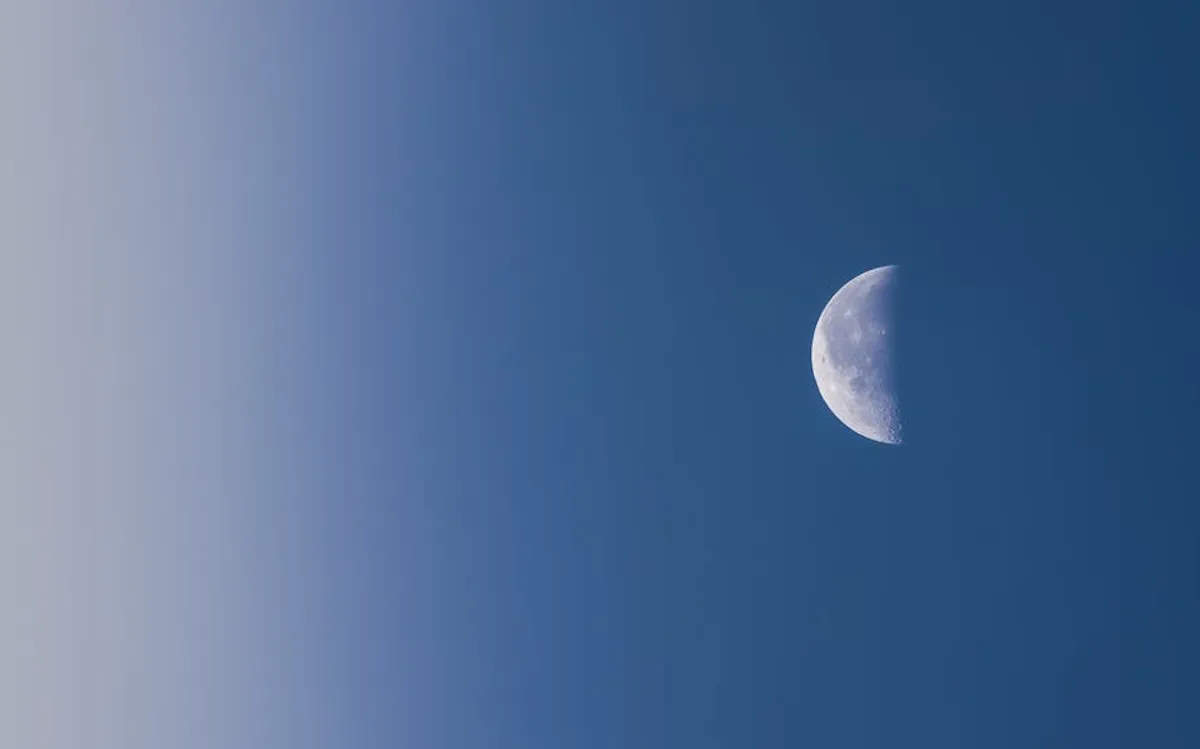
- First Quarter: Approximately half of the Moon's face is illuminated. It appears as a perfect half-circle.
Content Angle: Represents decision points, action, or building momentum. Content can revolve around mid-cycle reviews, overcoming challenges, or practical steps towards a goal.
- Waxing Gibbous: More than half of the Moon is illuminated, continuing to grow in brightness. "Gibbous" refers to the bulging shape.
Content Angle: Emphasizes expansion, refinement, and preparation. Suitable for content on advanced planning, perfecting skills, or maximizing output.
- Full Moon: The entire face of the Moon is illuminated, appearing as a bright, complete circle. The Earth is between the Moon and the Sun.
Content Angle: Peak energy, culmination, release, or heightened emotional states. Generates significant search interest for topics like lunar eclipses, specific full moon names (e.g., "Harvest Moon"), rituals, or sleep patterns.
- Waning Gibbous: Immediately after the Full Moon, the illuminated portion begins to decrease. "Waning" means decreasing illumination.
Content Angle: Focus on reflection, gratitude, or gradual release. Useful for content on reviewing progress, winding down, or preparing for transition.
- Last Quarter (or Third Quarter): Again, half of the Moon's face is illuminated, but it's the opposite half from the First Quarter.
Content Angle: Represents release, completion, or letting go. Content can address decluttering, forgiveness, or preparing for new cycles.
- Waning Crescent: Only a thin sliver remains, shrinking towards invisibility.
Content Angle: Emphasizes rest, introspection, or renewal. Suitable for content on self-care, quiet reflection, or anticipating new beginnings.
Why Do Moon Phases Occur?
The fundamental reason for moon phases is the Moon's orbit around Earth and the consistent illumination of half of the Moon by the Sun. As the Moon travels in its elliptical path, the angle at which we view its sunlit portion changes. When the Moon is between the Earth and the Sun, we see its unlit side (New Moon). When the Earth is between the Moon and the Sun, we see its fully lit side (Full Moon). All other phases are simply intermediate perspectives of this illuminated hemisphere. Understanding this orbital dance clarifies common misconceptions, such as the idea that phases are caused by Earth's shadow (which only happens during a lunar eclipse).
Tracking the Moon: Tools and Techniques
Modern technology has simplified moon phase tracking, making it accessible for casual observers and dedicated enthusiasts alike. Numerous mobile applications provide real-time moon phase data, rise and set times, and even specific astrological or cultural interpretations. Websites dedicated to astronomy and almanacs also offer detailed calendars. For those seeking a more hands-on approach, observing the Moon regularly over a month and noting its shape and position in the sky is an effective way to internalize the cycle. This consistent visibility makes moon phases an evergreen topic for educational content, observational guides, and photography tutorials.
Pro Tip: When planning content around moon phases, always specify the hemisphere (Northern or Southern) you are referring to, as the appearance of waxing and waning phases is reversed when viewed from opposite hemispheres. For example, a First Quarter Moon appears as a 'D' shape in the Northern Hemisphere but a 'C' shape in the Southern Hemisphere. This detail ensures accuracy and relevance for a global audience.
Harnessing Lunar Knowledge
Integrating an understanding of moon phases into content strategy offers a unique pathway to audience engagement and niche authority. By aligning articles, social media posts, and visual content with the lunar cycle, publishers can tap into predictable search interest spikes around specific phases, particularly the Full Moon and New Moon. This approach is highly effective for evergreen content clusters related to wellness, gardening, astrology, outdoor activities, and cultural events. Developing a content calendar that incorporates these natural rhythms provides a structured framework for consistent, relevant output, attracting a dedicated audience seeking information tied to these cycles.
Frequently Asked Questions
How long does a full lunar cycle last?
A complete lunar cycle, from one New Moon to the next, is approximately 29.5 days. This is known as a synodic month.
Does the Moon actually change shape?
No, the Moon itself does not change shape. Its phases are merely a result of how much of its sunlit surface we can see from Earth as it orbits us.
Are moon phases the same everywhere on Earth?
Yes, the specific phase (e.g., Full Moon, New Moon) occurs at the same time globally. However, the Moon's orientation in the sky and the exact time it rises and sets will vary based on your geographic location and hemisphere.
Can moon phases affect human behavior?
While popular folklore often links moon phases to human behavior, scientific studies generally do not support a direct causal relationship. Any perceived effects are largely anecdotal or psychological.