Understanding the moon's phases offers families a practical framework for planning outdoor activities, educational moments, and even quiet reflection. Each phase presents unique opportunities, from the darkest skies ideal for stargazing to the brightest nights perfect for illuminated adventures. This guide details twelve distinct lunar phases and their optimal applications, enabling families to align their schedules with natural celestial rhythms for more engaging and memorable experiences.
Choosing the Right Moon Phase for Your Family Activities
Selecting the ideal moon phase for family activities involves considering light levels, visibility, and the type of experience desired. Darker phases, like the New Moon and early crescents, prioritize stargazing and quiet observation, minimizing light pollution. Brighter phases, such as the First Quarter through Full Moon, provide natural illumination, extending outdoor playtime and facilitating activities that benefit from visible light. Transitional phases offer unique educational moments, allowing children to observe the moon's progression and understand its cycle. Evaluate your family’s interests, sleep schedules, and the specific goals for your outdoor or indoor time to best match them with the lunar calendar.
1. New Moon
The New Moon marks the beginning of the lunar cycle, when the moon is positioned between the Earth and the Sun, rendering it invisible from our perspective. This phase results in the darkest night skies, as there is no lunar illumination to compete with distant starlight. It's a period of minimal natural light interference, creating prime conditions for celestial observation.
Best for: Stargazing, meteor shower viewing, camping trips focused on astronomy, quiet indoor activities, planning future adventures.
Pros: Unparalleled dark skies for observing deep-sky objects, galaxies, and nebulae; ideal for identifying constellations; promotes a sense of quiet and renewal.
Cons: No moon to observe directly; can feel less visually engaging for younger children who prefer a visible moon.
Verdict: The New Moon is the definitive choice for families prioritizing serious stargazing and astronomical learning, offering the clearest views of the cosmos.
2. Early Waxing Crescent
Following the New Moon, the Early Waxing Crescent appears as a thin sliver of light, visible low in the western sky shortly after sunset. This delicate crescent offers a brief viewing window, providing the first glimpse of the moon after its invisible phase. It’s a subtle but significant start to the moon’s journey back to illumination.
Best for: Brief evening moon spotting, introducing younger children to moon phases, quick outdoor play before full darkness sets in.
Pros: Offers a unique, fleeting visual; serves as an excellent educational moment for tracking lunar progression; still allows for reasonable stargazing with minimal light pollution.
Cons: Very short viewing window; easily obscured by clouds or city lights; requires specific timing to catch.
Verdict: An ideal phase for a gentle, educational introduction to lunar observation, suitable for families looking for a quick, impactful evening activity.
3. Mid Waxing Crescent
As the moon continues its waxing journey, the Mid Waxing Crescent becomes more prominent and visible for a longer duration after sunset. The illuminated portion grows, allowing for easier detection and a more sustained period of observation than the early crescent. It still maintains relatively dark skies for combined viewing.
Best for: Evening walks, storytelling under emerging moonlight, early evening outdoor games, practicing moon photography.
Pros: Growing illumination provides some natural light for outdoor activities; good balance between moon visibility and star visibility; fosters a sense of anticipation for brighter phases.
Cons: Not yet bright enough for significant illumination of large areas; some fainter stars begin to be obscured.
Verdict: This phase offers a balanced opportunity for families to enjoy both a visible moon and relatively dark skies, blending casual observation with outdoor engagement.
4. First Quarter
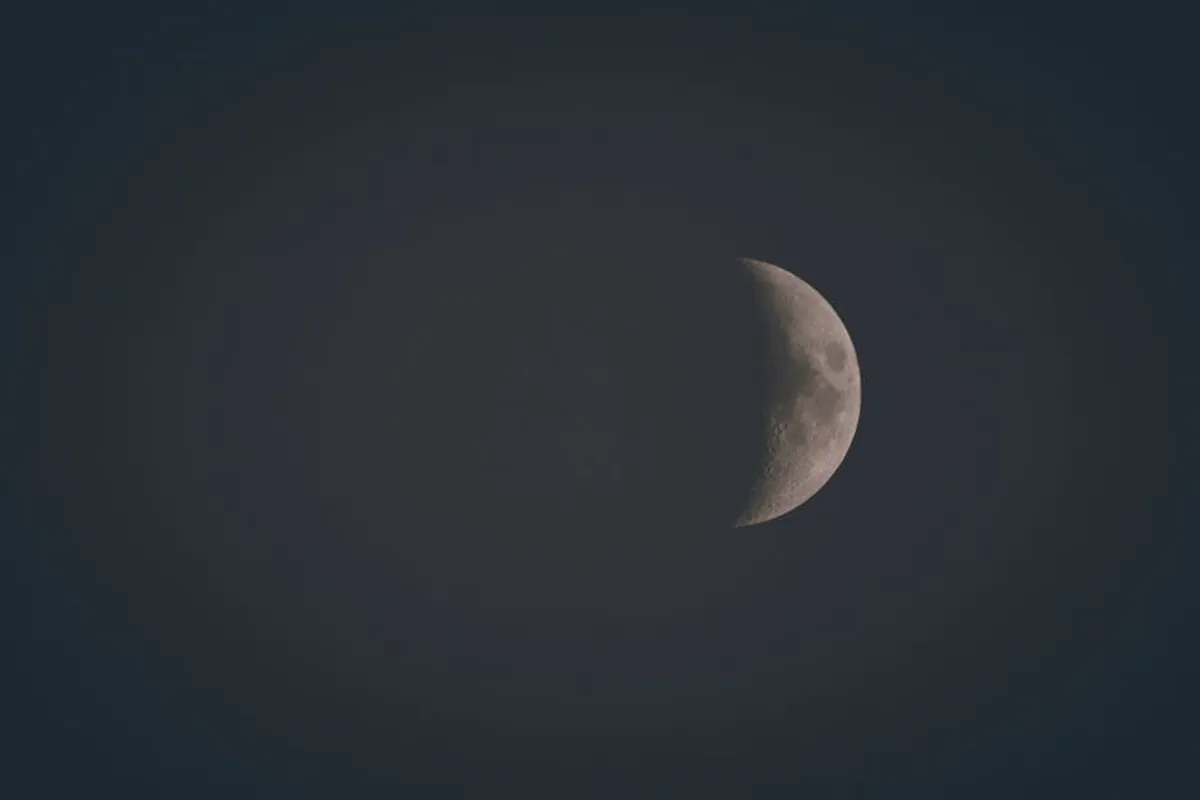
At the First Quarter, exactly half of the moon's face is illuminated, resembling a perfect half-circle. This phase is visible from late afternoon through the evening, making it highly accessible for families. Its distinct shape is easy to identify and track, providing a clear visual milestone in the lunar cycle.
Best for: After-school outdoor activities, early evening picnics, moon-themed crafts and drawing, basic telescope viewing of craters along the terminator line.
Pros: Easy to spot and observe for extended periods; excellent for teaching about lunar geography and shadows; provides enough light for comfortable outdoor activity without being overwhelming.
Cons: Less dramatic than a full moon; still too bright for optimal deep-sky stargazing; can be mistaken for a full moon by younger children.
Verdict: The First Quarter is a highly practical and educational phase, perfect for accessible lunar observation and incorporating the moon into everyday family routines.
5. Early Waxing Gibbous
The Early Waxing Gibbous phase sees more than half of the moon illuminated, continuing its growth towards fullness. The moon rises earlier in the day and remains visible for a significant portion of the evening, providing increasing natural light. This phase signals a transition towards brighter nights.
Best for: Longer evening outdoor play, preparing for full moon events, practicing lunar photography with increasing detail, extended walks.
Pros: Significant illumination for extended outdoor activities; increasing brightness creates a sense of wonder and anticipation; good for observing surface features with binoculars.
Cons: Stargazing becomes increasingly challenging due to the moon's growing brightness; can still be partially obscured by clouds.
Verdict: An excellent phase for families who enjoy longer evening activities outdoors, leveraging the moon's growing light to extend playtime and exploration.
6. Late Waxing Gibbous
Approaching its peak illumination, the Late Waxing Gibbous moon is nearly full, appearing as a brilliant, almost complete circle. It rises in the afternoon and remains visible for most of the night, casting substantial natural light. This phase is a clear precursor to the full moon’s grandeur.
Best for: Extended outdoor sports, evening barbecues, preparing for full moon celebrations, enjoying bright natural light without the intensity of a full moon.
Pros: Provides near-full moonlight for long periods, bright enough for many activities without artificial lighting; creates a magical ambiance for evening gatherings.
Cons: Extremely bright, making stargazing virtually impossible; can be too bright for sensitive eyes; may disrupt sleep patterns for some individuals.
Verdict: Ideal for families seeking abundant natural light for prolonged evening activities, offering a bright and accessible lunar presence before the full moon.
7. Full Moon
The Full Moon is the most visually striking lunar phase, with its entire face illuminated, rising at sunset and visible throughout the entire night. It casts the brightest natural light, transforming nightscapes and creating a distinct atmosphere. This phase is often associated with various cultural and natural phenomena.
Best for: Night hikes, full moon parties, storytelling around a campfire, lunar photography, quiet contemplation and meditation, observing nocturnal wildlife.
Pros: Maximum illumination for safe and enjoyable night activities; iconic and inspiring, fostering a sense of wonder; provides a unique backdrop for family memories.
Cons: Completely washes out all but the brightest stars; can be too intense for some activities; folklore can sometimes create unnecessary fears or superstitions.
Verdict: The Full Moon is perfect for families looking to embrace bright natural light for memorable outdoor adventures and celebrations, offering unparalleled visibility and a magical ambiance.
8. Early Waning Gibbous
Immediately following the Full Moon, the Early Waning Gibbous phase still presents a nearly full, brilliant moon. However, its illumination begins to decrease, and it rises later in the evening, remaining visible well into the morning. This phase offers a continuation of the full moon's light but shifts its prime viewing to later hours.
Best for: Late-night outdoor activities, early-morning walks or runs, reflective journaling, enjoying residual moonlight for extended periods.
Pros: Still offers significant light for evening activities; transitions from peak brightness, signaling the moon's gradual retreat; provides natural light for early risers.
Cons: Stargazing remains difficult; requires staying up late or waking early for optimal viewing; light gradually diminishes throughout the phase.
Verdict: A practical phase for families whose schedules lean towards late-night or early-morning activities, offering sustained moonlight for various engagements.
9. Late Waning Gibbous
During the Late Waning Gibbous phase, the moon is still more than half illuminated but continues to visibly shrink. It rises even later at night, often after midnight, and remains visible until after sunrise. This phase provides natural light primarily for the very late night or early morning hours.
Best for: Early morning walks or runs, quiet reflection, appreciating the moon before sunrise, observing the moon's changing shape over several mornings.
Pros: Provides natural light for early risers; offers a different perspective as the moon wanes; good for observational learning about the lunar cycle's decline.
Cons: Requires late night or early morning hours to view; less dramatic for evening family activities; light levels are noticeably lower than the full moon.
Verdict: This phase is best suited for early-rising families or those who enjoy quiet, reflective moments, offering a gentle start to the day with natural moonlight.
10. Last Quarter
Similar to the First Quarter, the Last Quarter moon appears as a perfect half-circle, but its illuminated side is now the opposite. It rises around midnight and is visible through the morning until midday. This phase marks the halfway point of the waning cycle, providing clear visual cues for its progression.
Best for: Early morning observations, teaching about the moon's cycle and phases, quiet starts to the day, identifying craters along the terminator line with binoculars.
Pros: Clear half-moon for observation and study; less intense light than the full moon, allowing for some star visibility; excellent for educational purposes and understanding lunar mechanics.
Cons: Requires waking up early to view; less common for evening family activities; prime viewing is restricted to morning hours.
Verdict: An excellent educational phase, the Last Quarter is ideal for early risers and families keen on structured lunar observation and learning about the moon's structure.
11. Early Waning Crescent
The Early Waning Crescent appears as a thin crescent of light visible in the pre-dawn sky. This delicate sliver signals the moon's nearing return to invisibility, offering a unique and often peaceful viewing experience before sunrise. It's a subtle reminder of the moon's cyclical nature.
Best for: Very early morning moon spotting, quiet contemplation, observing the moon's return to darkness, connecting with nature's quiet moments.
Pros: Educational opportunity to observe the moon's final visible stages; fosters a sense of completion of a cycle; unique pre-dawn viewing experience.
Cons: Very short viewing window; requires very early rising; often missed due to timing and low light.
Verdict: A subtle and fleeting phase, best for families seeking a quiet, reflective start to the day and those who appreciate the full spectrum of lunar change.
12. Late Waning Crescent
The Late Waning Crescent is the final visible phase before the New Moon, appearing as an extremely thin crescent just before sunrise. It is often challenging to spot due to its minimal illumination and proximity to the horizon. This phase represents the moon's final visible moments before restarting its cycle.
Best for: Observing the moon's final sliver before it disappears, dedicated lunar observation, connecting with nature's cycles and the anticipation of renewal.
Pros: A unique, almost hidden viewing opportunity for dedicated observers; reinforces the cyclical nature of the moon and its continuous journey; fosters patience and keen observation skills.
Cons: Extremely difficult to spot due to minimal light and low position; requires precise timing and clear skies; offers minimal practical light for activities.
Verdict: The most challenging phase to observe, suited for dedicated observers and families who appreciate the subtle nuances and the complete journey of the lunar cycle.
Maximizing Family Time with Lunar Cycles
Integrating lunar phases into family planning moves beyond simple observation; it's about optimizing experiences. For active families, the Full Moon and Waxing Gibbous phases provide ample natural light for evening sports, backyard games, or even safe, illuminated night walks, potentially reducing the need for artificial lighting. Educational opportunities peak during the First and Last Quarter moons, where the terminator line offers clear views of craters and mountains, perfect for budding astronomers with binoculars or a small telescope. The New Moon, with its dark skies, becomes a strategic window for camping trips focused on deep-sky stargazing, turning a simple outing into an astronomical adventure. By consciously aligning activities with the moon's light and visibility, families can enhance engagement, create distinct memories, and foster a deeper connection to the natural world. Consider keeping a lunar calendar visible to involve children in the planning, allowing them to anticipate and choose activities based on the moon's progression.
Frequently Asked Questions About Moon Phases for Families
Q: How do moon phases affect children's sleep?
A: While scientific evidence is mixed, some studies suggest that the Full Moon's increased brightness might subtly affect sleep patterns for sensitive individuals, including children. Planning quieter,