The small neighborhood bookshop is one of the European institutions of the past forty years that has, against considerable opposition, survived the period more or less intact. The story of the survival has been told in several places, and the version of the story that has become familiar — the resilience of physical retail against the dominance of online sales, the rediscovery of the bookshop as a third place by a younger cohort of readers — is not entirely wrong but is also not quite the whole story. The survival is more interesting than the familiar version suggests, and the reasons for it are worth understanding for anyone who cares about the form, which includes most of the people who read a magazine of this sort.
I have been a customer of small bookshops in five cities over the past two decades — Brooklyn principally, then in stretches London, Edinburgh, Lisbon, and Paris — and I have been close enough to several of the shops to have learned something about the economics of how they operate. The economics are not what most readers assume, and the difference between the assumed economics and the actual economics matters for understanding why the form has held up.
What the small bookshop actually is
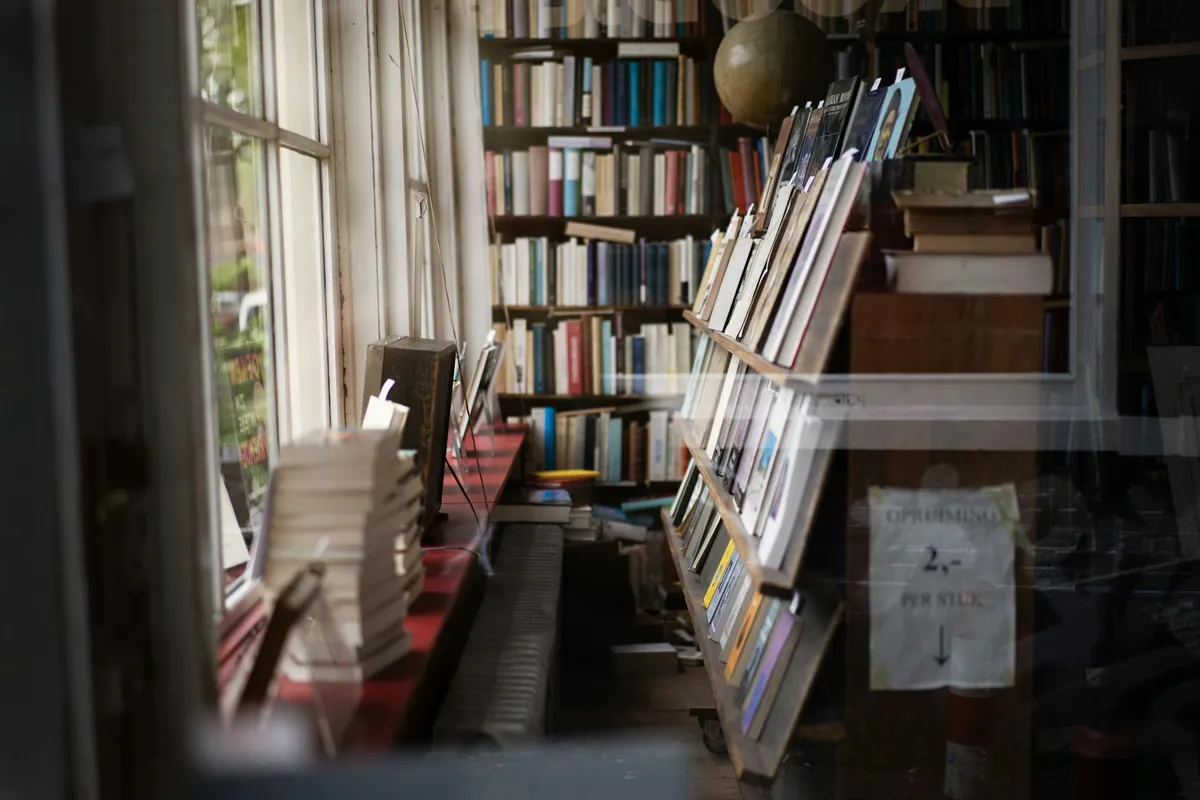
I should define the category I am writing about, because the term "bookshop" covers a range of operations that have very different characteristics. By the small neighborhood bookshop I mean a shop of roughly one thousand to two thousand five hundred square feet, located in a residential or formerly-residential neighborhood, owned and operated by one or two people who are usually present at the shop, with a curated stock of new books, often combined with a selection of used books or with a small section of curated stationery, with a customer base that is principally local and that knows the proprietor by name. The category does not include the large chain bookshop, the campus bookshop, or the antiquarian shop in the strict sense. It includes the small new-book shops that have, in the past twenty years, become a recognizable feature of certain neighborhoods in most of the cities I know well.
The category was widely predicted to disappear in the first decade of the 2000s, under the pressure of the online retailers and the chain bookstores. The prediction did not come true. The chain bookstores have, in many cities, contracted or disappeared. The online retailers have continued to grow but have not eliminated the demand for the small shop. The small shop has, in many cities, increased in number rather than decreased over the past fifteen years. The development is one of the more genuinely surprising of the small commercial developments of the period.
The economics, briefly
I want to say a few words about the economics, because most readers do not have any direct sense of how the small bookshop actually operates and the misconceptions affect how people think about the form.
The margins on new books in the small shop are modest. The standard discount that the small shop receives from the wholesale distributor is not large, and after the rent, the wages of the staff, and the operating expenses, the margin on a typical new-book sale is small. The shop cannot, on the strength of new-book sales alone, generate a substantial profit margin under most realistic operating assumptions. The small shop survives, in most cases, on a combination of book sales, ancillary sales of stationery and gifts and small printed items, event-related revenue, and a degree of cost control that requires the proprietor to be present, working, and accepting a level of personal compensation that would not be acceptable in most other comparable retail businesses.
The proprietors of the small shops I have known have been, in nearly every case, people who could be earning more money in some other line of work and who have chosen to operate the shop because they want to operate the shop. The choice is not a romantic one in their own account of it. It is a choice that they have made deliberately, with full knowledge of the economic structure, because the alternative — the working life in some other business — was not the life they wanted. The shops are operated by people who have decided that the shop is the life.
What the proprietor actually does
The proprietor of a small shop is doing several distinct things at once, and the distinct activities are worth naming because the surface impression — the proprietor as a curator of books — does not capture most of what the work involves.
The proprietor is selecting the stock, which involves the careful study of the publishing calendar, the conversation with sales representatives from the publishers, the assessment of what will sell in the specific neighborhood the shop occupies. The curation that the customer encounters is the product of considerable advance work, of the sort that the customer does not see.
The proprietor is managing the operations — the inventory, the receiving of stock, the returns of unsold books to the publishers, the small daily logistics of a retail business that has to track several thousand individual items in modest quantities. The operational work is not glamorous but is what keeps the shop functional.
The proprietor is doing the social work of the shop, which is what most distinguishes the small shop from the larger forms of bookselling. The proprietor is in conversation with regular customers, recommending books they think the customer will like, hosting authors, organizing events, and producing the small accumulated set of relationships that constitutes the shop's actual community. The social work is not separate from the commercial operation; it is what allows the commercial operation to work at all.
The proprietor is doing the financial management — the cash flow, the supplier relationships, the slow accumulation of working capital, the small constant attention to the gap between what is coming in and what is going out. The financial work is most of what determines whether the shop survives, and it is the work that the customers see least of.
What the customers actually buy
The customers of the small shop are buying books, but they are also buying several other things that the shop produces. They are buying the curation, which means they are buying the proprietor's decisions about what to stock and what to recommend. They are buying the social setting, which means they are buying the experience of being in the shop and of encountering the other customers and the proprietor. They are buying the community, which means they are buying the small accumulated relationships that the shop produces over the years that they are customers of it.
The bundling of these goods together explains why the customers continue to come to the shop rather than to buy the same books online at lower prices. The books are the same books. The other goods are not available through the online channel, and the customers who value them sufficiently are willing to pay the modest premium that the shop charges to support the production of them. The customers who do not value them buy from the online retailers, and the shop does not depend on them.
Why the form has held
The form has held, in the cities I know, for reasons that combine the demand side and the supply side in ways that the obvious story does not quite capture.
On the demand side, there is a population of readers in each city — small in proportion to the total population but substantial in absolute terms — who place serious value on the goods the small shop produces beyond the books themselves. The population has not eroded over the past twenty years. It has, if anything, grown, as the broader retail environment has thinned out and as the small shop has become more visibly distinctive against the background.
On the supply side, there is a population of people in each city — also small in proportion but substantial in absolute terms — who are willing to do the work of operating a small shop on the terms the work actually requires. This population has also not eroded. The cohort of proprietors I have seen come into the form over the past decade is, if anything, more thoroughly committed to the form than the cohort of two decades ago, and the operational standards have generally risen rather than fallen.
The combination of the durable demand and the durable supply has produced a form that has held against the surrounding pressure. The form is not numerous. It is durable. The shops that survive tend to survive for long periods, and the new shops that open tend to be operated by people who know what they are taking on.
What it takes to keep one going
The keeping going of a small bookshop is not, as I have tried to indicate, the matter of romantic dedication that the public discourse around the form sometimes suggests. It is, in the proprietors I have known, a working life of considerable difficulty and considerable reward, conducted by people who have decided that the difficulty is acceptable given the reward and who have built lives around the decision.
The form depends on the people who are willing to operate it. The form also depends on the customers who are willing to support it with their custom and with their long-term loyalty. The two depend on one another. The customer who buys their books from the online retailer to save several euros is not supporting the form. The customer who buys their books from the small shop is. The small shop continues to exist as long as enough customers continue to make the second choice. This is, when stated plainly, not complicated. The continuing existence of the form depends on the continuing decisions of the people who use it.
I do not name the specific shops I have used over the years, because I want them to continue to operate without the attention that the published recommendation produces. I will say only that the shops I am thinking of are recognizably the shops of the kind I have been describing, and that they are operated by people who deserve the support of their customers, and that the small repeated decision to use them is one of the small ordinary practices by which an adult can support the kind of city they want to live in.