I will report something I have noticed, with some surprise, over the past several years of moving back and forth between European cities for work and for the divided arrangement of my domestic life. The small hotels of Lisbon have, in this period, become better than the small hotels of Paris. By "better" I mean better at the thing that small hotels are actually for, which I will define carefully below. The development has been gradual and is not yet, I think, widely recognized in the travel press. It is worth naming because the development tells us something about what has been happening to the European city in the past decade, and because the development has practical implications for anyone who is currently choosing between cities in which to spend a few unhurried days.
I want to be clear that I am not making a tourism complaint about Paris. Paris remains, in most respects, the city it has been for several centuries, and most of what is good about Paris is unaffected by the small problem I am describing. I am making a narrow claim about a specific category — the small, owner-operated hotel of fifteen to forty rooms, in a residential or formerly-residential neighborhood, in which the visitor stays for a number of nights and from which the visitor proceeds to do whatever it is they have come to the city to do. This category used to be definitively Parisian. It is now, on my reading of the evidence, more thoroughly developed in Lisbon than in Paris, and the reasons are interesting.
What a small hotel is actually for
I had better define the category before I make claims about it. A small hotel, in the sense I am using here, is not a luxury hotel. It is not a chain hotel. It is not a design hotel of the sort that has become a recognized category in the past fifteen years, in which the architecture and the brand and the lifestyle proposition are the principal product. It is something more modest, with a longer history, that is identifiable across the European cities by a recognizable set of features.
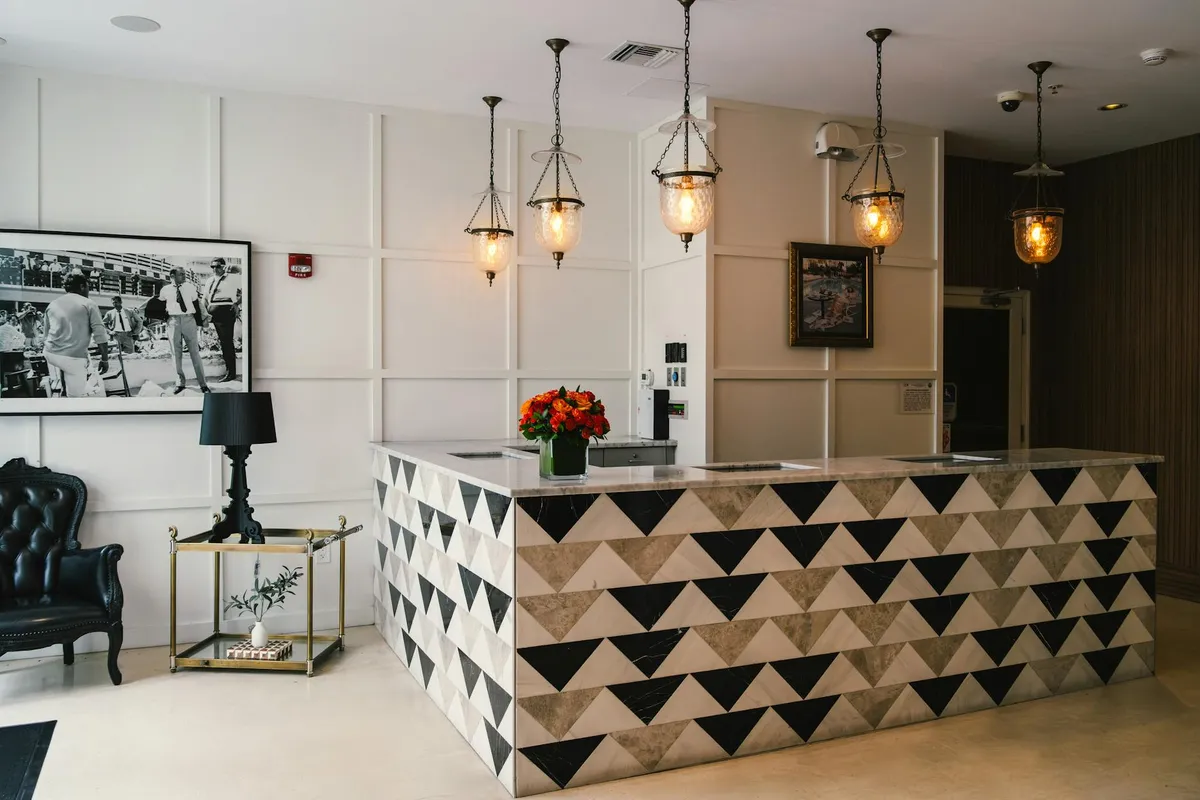
The small hotel is, in its proper form, a building of moderate size in a recognizable neighborhood, owned and operated by a person or a family who are present in the building most days, with rooms that have been furnished thoughtfully but not extravagantly, with a small breakfast that is taken in a room downstairs or in the small courtyard, with a front desk that is staffed by people who know the city and who will tell you something useful about it if you ask, and with a price that is meaningful but not punitive. The small hotel is the form in which the visitor can stay in a foreign city without feeling that they are doing tourism — they are, while staying in the small hotel, in a recognizable way, just living in the city for a few days from the address of the hotel.
The category has been part of the European city for as long as travelers have been moving among the cities, and the older European travel writing is in large part the record of what the better small hotels were doing in the various cities at the various periods. The category has been under considerable pressure over the past two decades from the short-term rental platforms, from the major hotel chains, and from the design-hotel cohort. The pressure has not destroyed the category, but it has thinned it in many places, and the cities in which the category remains strongly developed are not the cities that one might have predicted at the start of the period.
What happened to the Parisian small hotel
The Parisian small hotel is a recognizable historical form. Paris is the city in which the form was, for much of the twentieth century, most thoroughly developed. The arrondissements were full, by the postwar period, of small family-owned hotels of the sort I have been describing, with the names that English-speaking readers will recognize from the travel writing of several generations — the small hotels of the seventh arrondissement, of the fifth, of the Marais before it became what it has become, of the Saint-Germain side of the river. The Parisian small hotel was, for a long time, the European standard against which the corresponding hotels in other cities were measured.
Several things have happened to the Parisian small hotel in the past two decades. The real estate values of the central arrondissements have risen to a degree that has made it difficult for the owner-operated small hotel to remain viable as a family business. The buildings have been bought, in many cases, by larger hospitality groups that have renovated the hotels into the design-hotel form, with the boutique-luxury aesthetic that has become a recognizable category. The renovated hotels are often very good in their own terms, but they are no longer the small-hotel form. The owner is not present. The staff is professional rather than familial. The rooms have been done by a designer rather than furnished by the owner. The price has gone up to reflect the new proposition.
The smaller Parisian hotels that have remained in the older form have been increasingly squeezed into a market position that has become difficult. They are competing for visitors with the design hotels above them in price and with the short-term rental platforms below them in price, and the squeeze has not been good for the form. Some have survived and continue to do excellent work. Many have closed or have sold to the larger groups. The category has thinned, in Paris, more than in any other European city I know well.
What happened to the Lisbon small hotel
The Lisbon situation has developed differently, and the differences are worth setting out. Lisbon has had, over the past fifteen years, a substantial expansion of small hotels in the residential neighborhoods — particularly in Príncipe Real, in Estrela, in parts of Alfama and Graça, and in the streets north of the river that are walking distance from the historical center without being in it. The expansion has been driven in part by the older tradition of the Portuguese pensão and in part by a newer generation of small operators who have approached the small-hotel form deliberately.
The newer Lisbon small hotels are not, as a rule, design hotels in the boutique-luxury sense. They are, more often, restoration projects in which a family or a small group has bought a building of the right period — typically a townhouse or a small apartment building from the late nineteenth or early twentieth century — and has restored it with care while keeping the room count modest. The interiors are furnished with consideration. The owners are present. The staff is small and knowledgeable. The breakfast is real. The price is meaningful without being absurd.
The form is, by my assessment, the strongest version of the small-hotel proposition currently available in any European city I have spent serious time in. The Lisbon small hotel of 2026 is doing what the Parisian small hotel of 1985 was doing, in a city that is still affordable enough to support the form and with operators who have approached the form with the appropriate seriousness.
Why this happened
The reasons are not difficult to identify, though they are worth setting down. Lisbon's property values, while they have risen substantially in recent years, are still considerably below those of central Paris, and the small-hotel business model is therefore still viable in the residential neighborhoods of the city. The Portuguese regulatory environment for the licensing of small hotels has been, on the whole, less hostile to the form than the corresponding Parisian environment. The cohort of operators in Lisbon includes a substantial number of returned-emigrant Portuguese and of foreign residents who have brought capital and operational experience to the category. The city has been hospitable to the form.
There is also a cultural dimension that I will mention briefly. The Portuguese hospitality tradition, as I have experienced it over the past several years, has been remarkably durable across the changes of the period. The Portuguese small-hotel operators I have stayed with have been, on the whole, formal in a way that is recognizable from the older European hospitality writing and that is no longer routine in the larger European cities. The formality is not a performance. It is, in the older sense, the form by which the host signals that the guest is welcome.
What this means for the visitor
The practical implication is simple. If you are choosing, in 2026, between a few days in Paris and a few days in Lisbon, and your principal interest is in the experience of the small hotel as a way of being in the city, you will probably have a better stay in Lisbon than in Paris. This is not a recommendation against Paris. Paris is still Paris. It is a recommendation that you set your expectations for the small-hotel category according to the current state of the category, which is no longer what it was a generation ago in the city it used to define.
The specific small hotels in Lisbon that I have stayed in repeatedly, and that I would recommend without reservation to anyone who reads this site, I will not name in this piece. The category is in a delicate state of equilibrium, and the published recommendations of small hotels by writers in publications have a way of disturbing the equilibrium more than they help it. Anyone who is interested can find the relevant places through the usual research. I will say only that the form is alive in Lisbon, that the operators are doing serious work, and that the experience of staying in one of these places for a week is among the few experiences of contemporary European travel that has, in my recent years, exceeded the experiences of the corresponding category in the periods when the corresponding category was supposed to have been at its best.
The European city is changing in many ways, some of them good and some of them not. The persistence and the flourishing of the Lisbon small hotel is one of the good ways, and the visitor who chooses to experience it is participating, in a small way, in the continuation of one of the older European forms.