I would like to say a few things in favor of the practice of travelling alone, for a week, to a city one does not know well, at least once a year. The practice is one of the older practices of adult life that has, against considerable pressure, held up across the period and that still produces, when conducted with a small measure of intentionality, an effect that no other available form of travel produces. I want to describe the effect, set out the case for the practice, and say something practical about how to conduct it. The case is not, I want to be clear, the case for solo travel as self-discovery. The case is for solo travel as a particular kind of attention to the world, conducted in a particular kind of setting, that the rest of the year does not otherwise provide.
What I mean by travelling alone
I should define the practice, because the term has been broadened to cover several different things. By travelling alone I mean a trip of approximately a week, to a city the traveler does not know well, undertaken without companions, with a modest budget, and with a minimum of pre-planning beyond the booking of the room and the basic transportation. The trip should be undertaken with a notebook and a few books and the willingness to spend most of the days walking and looking and reading and writing things down.
The trip is not, in this account, a vacation in the recreational sense. It is also not a working trip — the traveler is not in the city to produce specific deliverables for an employer or for a publication. The trip is, in the older sense of the term, a small period of voluntary displacement, conducted alone, in which the traveler attends to a place that is not their own place and lets the attending produce whatever it produces.
What the practice produces
The practice produces several specific effects that I want to describe with some care, because the descriptions matter for the case.
It produces, first, a particular kind of unaccompanied attention to the place. The traveler who is alone in a city pays attention to the city in a different mode than the traveler who is in the city with a companion. The traveler with a companion is, much of the time, in conversation with the companion, and the conversation is one of the principal subjects of the traveler's attention. The solo traveler is in the city in an undivided way that is structurally not available to the accompanied traveler. The undivided attention is, in my experience, one of the principal benefits of the form.
It produces, second, the necessity of self-management across the days. The solo traveler has to decide, every morning, what they are going to do that day. The decisions are made by the traveler alone, without negotiation. The decisions are not, on any individual day, particularly weighty, but the accumulation of them across a week produces a small daily exercise of agency that the working life does not, in most adult schedules, otherwise produce. The exercise is restorative in a way that is difficult to name and that I have heard from a number of solo travelers in terms that suggest it is general rather than peculiar to me.
It produces, third, the small period of social uninterruption that the accompanied life does not. The solo traveler has, in the course of a week, periods of several hours in which they are not in conversation with anyone known to them. The periods are not, in any obvious sense, lonely. They are, in the experience of most solo travelers I have spoken to, restorative. The capacity to be alone with one's own thoughts, in an unfamiliar setting, for several hours at a time, has become rare in adult life in 2026, and the deliberate week's practice of it is, for that reason, more valuable than it would have been a generation ago.
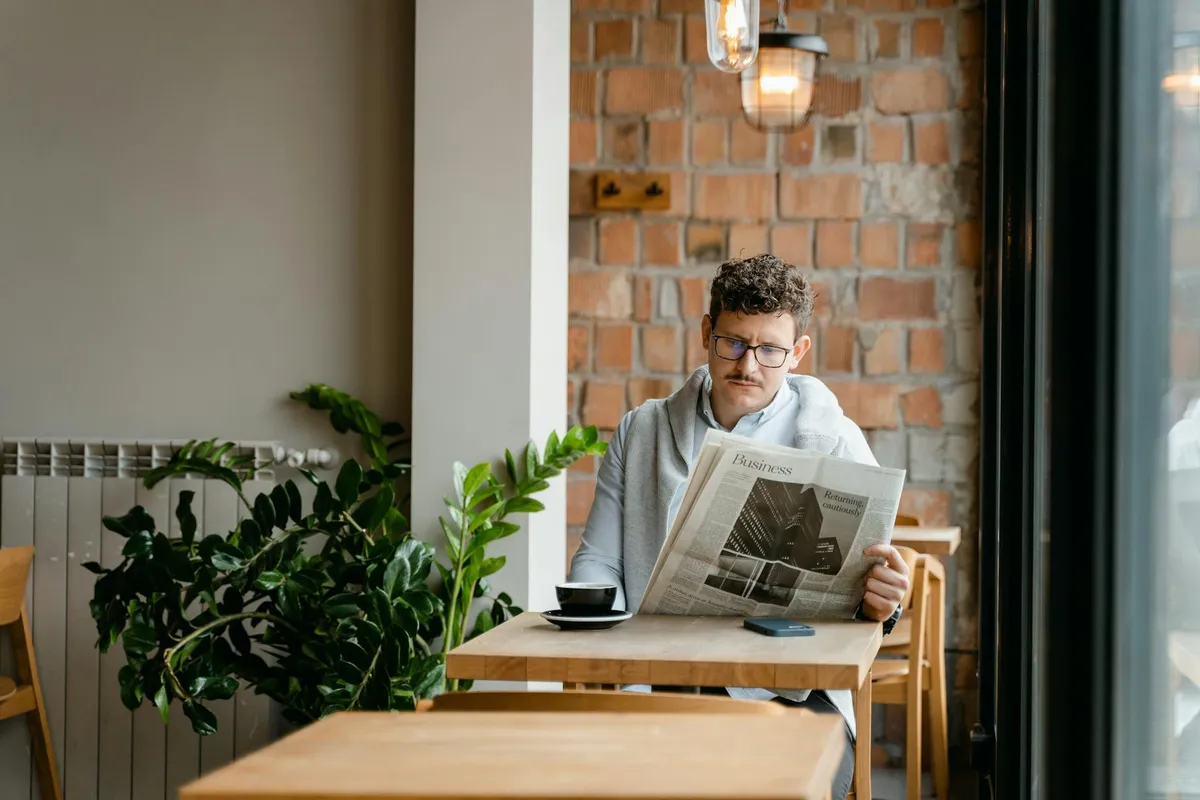
It produces, fourth, the small particular pleasure of the cafe alone in a foreign city. This is a particular pleasure that I will not elaborate on at length, because anyone who has done the thing knows what I am talking about and anyone who has not done it will not, on the strength of my description, come to understand it. The cafe alone in a foreign city in the late morning, with a coffee and a notebook and a newspaper one has bought from a vendor whose language one does not fully speak, is one of the small reliable pleasures of the form, and the pleasure can be drawn on regularly through the week.
It produces, finally, the small practical good of having gone somewhere. The traveler who has spent a week in a city they did not know returns with the small accumulated knowledge of the city — the layout of the neighborhoods, the rhythms of the days, the small details of the shops and the cafes and the parks that they spent time in — that is the small substance of the actual trip. The knowledge is not, on its own, of any particular use. It is the substance of having gone, and the having-gone is one of the small steady additions to an adult life that the practice produces.
What the practice does not produce
I want to address briefly what the practice does not produce, because the surrounding discourse has, in the past decade, claimed a number of things for solo travel that I do not, on my own experience, find to be true.
It does not produce self-discovery in any dramatic sense. The traveler who returns from a week alone in a foreign city is, in nearly every case I have observed, the same person who left, with the same characteristics and the same preoccupations. The expectation that the solo trip will produce a transformation has been planted by a particular literature that I do not find to be reliable. The trip does what it does, which is the things I have described, but the trip does not, in general, change the traveler in the dramatic ways that the genre sometimes claims.
It does not produce, on its own, any particular wisdom about the place. The traveler who has been in a city for a week is, after the week, a person who has been in the city for a week. They have not, on the strength of the week, become an expert in the place. The pretension that the short trip produces understanding of the place is one of the small dishonesties of contemporary travel writing, and the practice I am recommending does not require the dishonesty.
It does not produce, on its own, any particular new social network. The traveler who has spent a week alone in a foreign city will, in most cases, have spoken to relatively few people during the week and will not have established the lasting cross-cultural friendships that the social-media presentation of solo travel sometimes suggests. The trip can produce, occasionally, a chance encounter that develops into something more, but the production of the encounter is not the principal aim of the practice.
How to do the practice
The practical execution of the practice is straightforward, but a few specific recommendations are worth making.
Choose a city you do not know well. The case for the unfamiliarity is that the unfamiliar place produces the kind of attention I have been describing in a way that the familiar place does not. The city does not need to be exotic. A European city is fine. A North American city is fine. The choice should be a city that you have not previously spent extended time in.
Book a room of moderate quality in a residential neighborhood. The small hotel of the kind I have written about elsewhere is the ideal form. The short-term rental in a residential building is also acceptable. The accommodation should not be in the principal tourist area of the city, because the practice operates better from a base in an ordinary neighborhood.
Travel with a small bag. The carry-on is sufficient for a week of solo travel for any reasonable purpose. The smaller bag is one of the small practical goods of the practice and is, on its own, worth the small discipline required to pack it.
Bring a notebook and two or three books. The reading material should be of moderate quality and should not be the books that the traveler is reading in their normal life at home. The trip is the occasion for the small deviation in reading.
Bring a small budget for ordinary expenses. The practice is not improved by spending substantially more than usual on meals or on entertainment. The ordinary cafe and the ordinary restaurant in the residential neighborhood are the appropriate venues.
Avoid the conventional tourism schedule. The major museums and the major monuments may or may not be of interest, depending on the city and on the traveler. They should not be the structuring principle of the week. The structuring principle should be the unscheduled walking and the unscheduled sitting in cafes and the unscheduled looking at the small daily life of the city.
Keep a notebook through the week. The three sentences a day I have written about elsewhere can be adapted to the solo trip, with the notebook becoming a small daily log of what the day contained. The log is part of how the trip produces its effect.
A small closing note
The case for the solo trip is, in its plainest form, that it is one of the small available practices for adding an unusual kind of attention to one's own life on an annual basis. The trip is small. It is also reliable. The trips I have made under this rubric over the past fifteen years have, in nearly every case, been among the better weeks of the year in which they fell. The practice does not require any particular financial means. It does not require any particular adventurous disposition. It requires the willingness to be alone in an unfamiliar place for a week and to attend to what the week produces.
If you have not done such a trip in some time, I would suggest that you might consider doing one this year. The downside is small. The upside is one of the small reliable additions to an adult life that the practice produces, and the additions compound across the years that the practice is kept. The form is older than the contemporary travel writing and is, in my view, more durable than the contemporary travel writing has yet acknowledged.