The dinner party went away for a while. This is not a contentious claim. Anyone who has been keeping a careful eye on the question of how we spend our evenings will have noticed that, for some long period running from roughly the financial crisis to the recent past, the practice of asking six or eight people to sit down at one's own table for a slow evening more or less collapsed as a routine social form. There were reasons. The kitchens of the apartments we could afford were small. The people we knew were tired. The act of cooking for company began to feel, in the era of the small plate and the curated tasting menu, like an embarrassment of effort. We met for drinks. We met at the restaurant. We met, eventually, on a screen. We did not meet at the table at home.
The dinner party has now started to come back. I notice this in the most ordinary places — among the people I know in Brooklyn, among the friends I have made in Lisbon, in the dispatches from London and Edinburgh and Marseille — and I want to say plainly that the return is one of the small developments of the present moment that is unambiguously good. The dinner party is among the older social forms that we got wrong to abandon. The grounds on which it was abandoned were not as serious as we treated them at the time. The fact that it is coming back tells us something about what people have begun to want again, having had a long enough taste of the alternative.
What the dinner party actually is
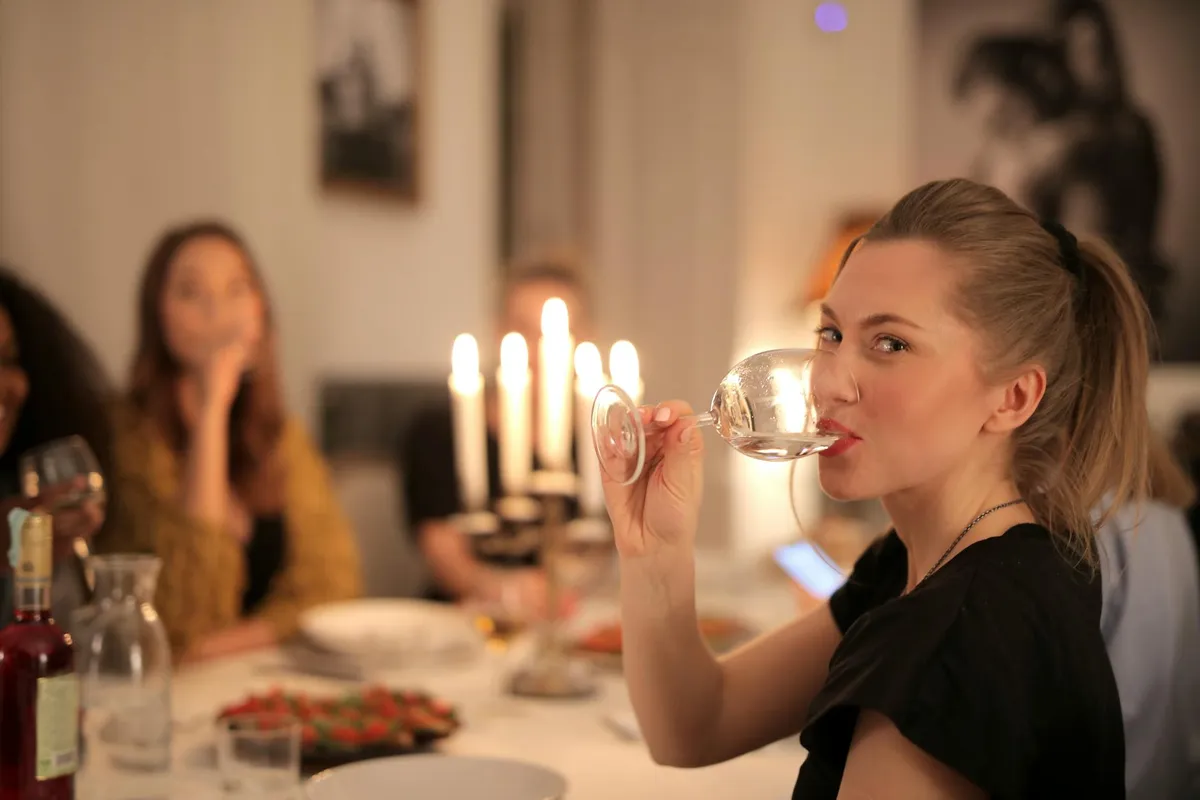
It is worth being precise about the subject. A dinner party is not a small gathering at which food is served. It is not, exactly, the same thing as having friends over for a meal, though it is in that family. The dinner party in the older sense is a specific form: six to eight people, an invitation made several days in advance, a meal that has been planned and cooked at home by the host, drink that has been chosen rather than brought, a table that has been set rather than improvised, and an evening that is expected to last from a reasonable starting hour to a late hour without anyone needing to be told to relax.
The specificity matters because the specificity is what produces the effect. The dinner party works on the participants not because the food is exceptional or because the conversation is elevated but because the form imposes a particular structure on a particular number of people for a particular length of time. You are at a table. The people are arranged in a way that requires you to speak to the person to your left and the person to your right. There is a meal to be eaten, which provides the small rhythm of courses, of glasses being refilled, of the natural pauses that occur when a plate is cleared. The form holds the evening in a way that no other form quite does.
Why we abandoned it
The reasons we abandoned the dinner party are not difficult to identify, but they are worth setting down because each of them was, at the time, taken more seriously than the form deserved. The first reason was kitchens. The apartments that became affordable in the cities we wanted to live in had small kitchens, often without proper ovens, and the cooking of a meal for eight became an exercise in logistics that the host had to manage rather than a thing one simply did. The second reason was time. The professional lives we built in the cities asked for hours that left the host, on a Friday evening, in a condition unsuited to the standing and chopping and timing that the form requires. The third reason was money. We could spend the same money at a restaurant and have someone else do the work, which seemed, in narrow terms, rational.
The fourth reason was less practical and more cultural. We came to feel, in the period we are now leaving, that hosting was a kind of imposition — that to invite people to your home and to cook for them was to ask them to engage in a performance of intimacy that they had not signed up for, that we were better at honesty when we met at the neutral ground of the restaurant or the bar. The reasoning was wrong, but it was the reasoning, and it produced the long absence.
What was lost
What was lost when the dinner party went away was not the meal. The meal was, in narrow culinary terms, often improved by the move to the restaurant; few of us cook at home as well as a good kitchen does. What was lost was the form itself — the particular structure of an evening in which a small group of people are held at one table for several hours, and the particular kind of conversation and acquaintance that this form produces.
There is a sort of friendship that develops only across many slow evenings at one another's tables. It is different from the friendship that develops in cafes or in bars or on hikes. It involves seeing the other person's home, eating the food they have chosen to make, sitting in the chairs they have chosen to own. It involves the small revelation of the host's taste in glassware, in salt, in what is hung on the walls. It involves the reciprocal vulnerability of the invitation — you have asked me to your home, I will ask you to mine — which is not the same vulnerability as the vulnerability of conversation alone. It involves time, in long unbroken stretches, of the sort that meals at restaurants do not produce because the table is needed by another party at nine.
This sort of friendship was difficult to maintain through the long absence of the form. People I had known well in the dinner-party years became, when the form fell away, people I saw at parties or at openings or for drinks, and our friendship became correspondingly shallower without anyone particularly noticing. It is only now, with the form returning, that I can see plainly how much the form was doing.
What the return looks like
The dinner parties I have been invited to in the past year have a slightly different texture from the dinner parties I remember from a decade ago, and the differences are worth noting. The hosts are, in general, less anxious about producing a polished meal. The cooking is simpler. There is more long-roasted meat, more straightforward braises, more bowls of rice and bowls of greens, and fewer elaborate three-course constructions. The bread is bought. The dessert is often a single thing on a plate — a tart, a wedge of cheese, a bowl of fruit and nuts. The wine is good but not impressive. The flowers, if there are flowers, are loose.
The hosting has become more confident in the same proportion that the cooking has become more relaxed. The hosts I have seen this year understand that the meal is the occasion for the evening rather than the point of it, and they conduct themselves accordingly. The guests, I notice, are correspondingly more present. We are not, as we sometimes were a decade ago, watching the host produce a performance. We are eating dinner at a table.
Why this matters
It matters because the small forms of ordinary life are the substance of an ordinary good life, and the dinner party is one of the small forms that does not have a good substitute. The restaurant does not replace it. The drinks at the bar do not replace it. The dinner with one friend at the kitchen counter does not replace it, though it is a fine thing in its own right. The dinner party is the form by which six or eight adults are held at a table for an evening, and the practice of that form is one of the small things by which the texture of a life is made.
I have come around to thinking, in the past year or two, that the recovery of the dinner party is among the more cheerful cultural developments I can name. It is happening without the involvement of brands, without the mediation of platforms, without anyone trying to sell anyone anything. It is happening because the people I know have remembered that they like one another's company at the table for a long evening, and because they have decided that the small effort of producing such an evening is worth the trouble. The form does not need an apology and it does not need a manifesto. It needs, at most, the willingness to send the invitation. Most of us, it turns out, have been waiting for the invitation all along.
If you have not hosted a dinner party in some long while, I would suggest that you might consider doing so. The food does not need to be exceptional. The wine does not need to be impressive. The table need only be set and the friends need only be asked. The form will do its work, as it has done its work for as long as people have eaten together at home, and you will find at the end of the evening that something has happened that does not quite happen anywhere else.