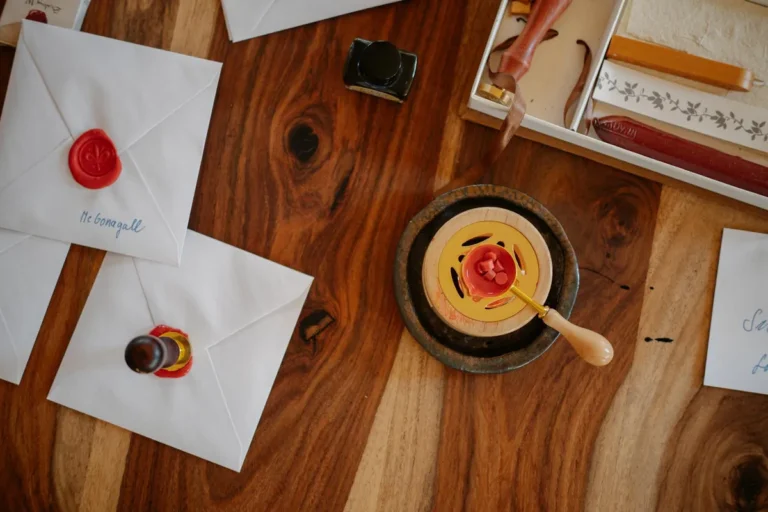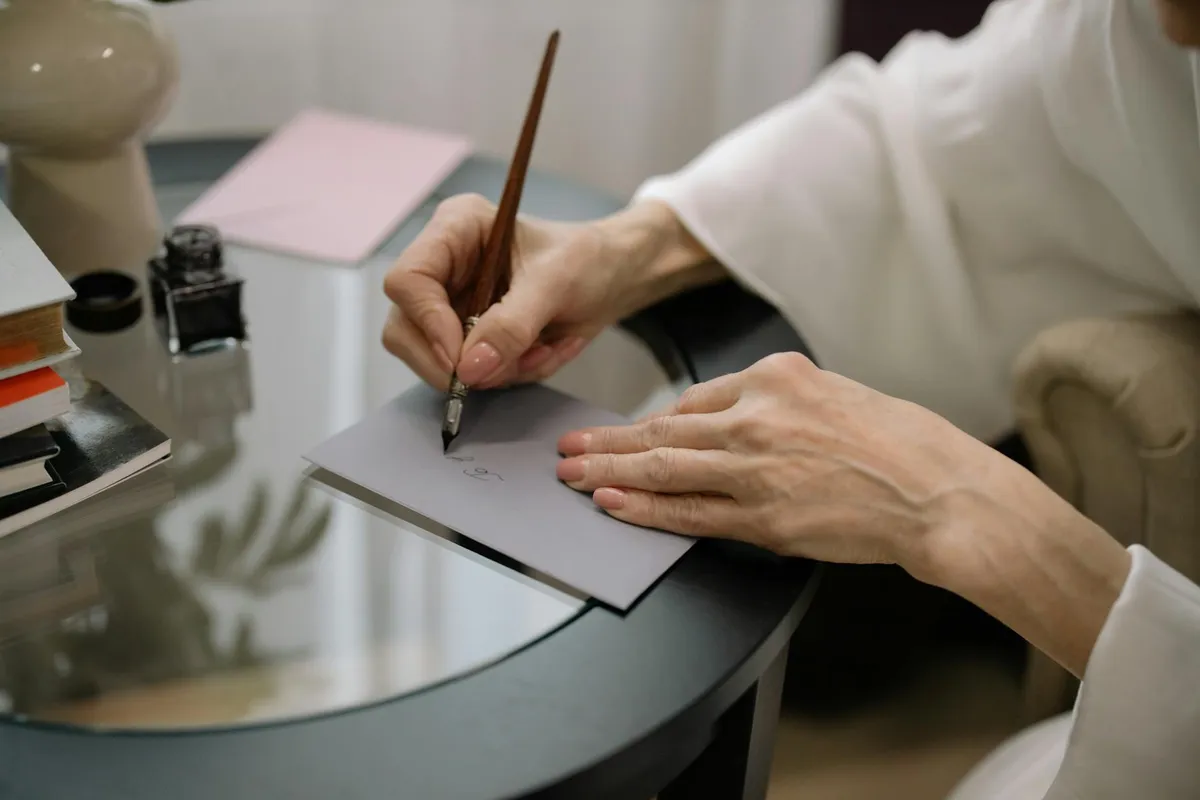
I would like to make a small case for the handwritten thank-you note, in 2026, sent through the actual postal service to an actual address, written by hand on actual paper. The case is not, as I will try to show, a nostalgic one. It is a case about what is currently in short supply, about what produces an effect in the present circumstances, and about a small practice that has, against all reasonable prediction, become more meaningful in this period than it was at any earlier point in my working life.
I will set out the case briefly and then say a few things about how to do the thing well, because there are some practical points that have been lost as the practice has fallen out of routine use, and they are worth recovering.
Why the note has become meaningful
The handwritten thank-you note has become meaningful, in 2026, for reasons that are produced by the present moment rather than by any property of the note itself. The note has always been a small considered gesture. The reason it now functions more strongly than it did fifteen years ago is that the surrounding environment of communication has thinned out to such a degree that the considered gesture stands out against the background in a way that it did not previously.
The thinning of the surrounding environment is, by now, a familiar enough story that I will not labor it. The default modes of communication for everyone with a working professional life have become email, text message, and the various platform messages. The volume of communication has gone up. The average attention paid to any individual communication has gone down. The standard registers of warmth, of formality, of considered phrasing have eroded under the pressure of the volume. The standard professional email of 2026 is brief, decarbonated of warmth, and structurally indistinguishable from the hundreds of other emails that the recipient has received that week.
Against this background, a handwritten note arrives with a force that is disproportionate to the effort involved in producing it. The recipient holds a physical object that someone has spent time on. The object is rare enough now that the recipient remembers receiving it. The recipient is, in most cases, mildly moved by the fact of the note in a way that they would not have been a generation ago, when the note was a routine form.
This is the asymmetry that makes the practice worth taking up. The cost is small. The effect is large. The reason the effect is large is not that the note is, in itself, an extraordinary object. It is that the surrounding environment has thinned out enough that the ordinary object now produces an effect.
What the note actually does
The note does several things, which are worth being precise about. It communicates the specific content of the thanks, which can usually be communicated equally well by other means. This is the surface function. The deeper functions are more substantive.
It signals to the recipient that you have decided to spend a particular amount of time and care on the communication. The choice to write by hand, on paper, with an envelope and a stamp, is a choice that is visible in the object that arrives. The recipient understands that the choice was made. The recipient also understands that you understand that the recipient understands. There is a small mutual recognition that some care has been invested.
It produces a physical object that the recipient can keep. Most of the communications that pass through professional life leave no durable trace; they are read once and archived, and the archive is not consulted. The note can be placed on a desk or on a shelf or in a drawer, and it can be encountered again, weeks or months later, with the small renewed effect of the original communication. I have notes from people of mine that are now five and ten years old, and the notes still produce the effect.
It also marks the writer, in the mind of the recipient, as a person who conducts themselves in a particular way. The marking is small and accumulated. It is not, by itself, a basis for any specific outcome. But over time, across the small population of people one corresponds with seriously, the marking compounds into a reputation, in the older sense, for a particular sort of attention. This is one of the small assets that an adult can develop in their working life, and the handwritten note is one of the principal ways it is developed.
When to send one
The occasions on which a handwritten thank-you note should be sent are, by my reckoning, more numerous than is currently recognized, and I will name several.
After a dinner at someone's home, always. The host has spent hours on the meal and on the preparation of the evening. The thank-you note in this case is so close to mandatory that I am surprised at how often it is omitted. The note should arrive within a week. It should mention something specific about the evening — a dish, a piece of conversation, a moment that was particularly good — so that the recipient knows the note has been written by a person who was actually present and not by a person discharging an obligation.
After a serious professional favor — a thoughtful introduction, a long advisory conversation, a piece of advice that has been useful. The note should be sent within ten days. It should be specific about what was useful and why. It does not need to be long.
After a stay as a houseguest, always, and within the week. This is one of the older recognized contexts for the note and it has not been replaced by anything. The note should mention the room, the meals, the conversation, something specific from the visit.
After a meaningful gift, particularly a gift that has been chosen rather than ordered. The note should arrive within two weeks. It should be specific about why the gift has been appreciated.
On the death of someone close to a recipient, where you have been close enough to the deceased or to the recipient to make the communication appropriate. This is the most demanding occasion for the note and the one at which it does the most work. The note should be sent within a week. It should be brief. It should not attempt consolation in the form of philosophical observation. It should communicate simply that you have heard, that you are sorry, that you are thinking of the recipient, and, if you have any specific recollection of the deceased, what the recollection is.
The mechanics, briefly
The practical execution of the note has been forgotten by most of the people who would otherwise be doing it, and a few words about the mechanics are worth saying.
Keep good stationery in the house. This is the first practical condition without which the practice will not be sustained. A box of cream-colored cards of moderate size, with matching envelopes, kept in a drawer of the desk where you can find it without effort. The cards should not have a printed monogram or design unless you have one that you actually like and have used for some years. Plain cream cards are entirely correct.
Keep stamps. The note does not work if you cannot send it. Stamps are easy to acquire and easy to keep in the same drawer.
Keep an address book, which can be electronic, with the actual postal addresses of the people you might want to write to. Most people in your life do not have their address written anywhere that you can find it when you need it.
Write with a pen that produces a line you do not have to apologize for. A fountain pen is correct but is not required. A ballpoint of reasonable quality is acceptable. A felt-tip is not.
Write briefly. The note does not need to be long. Three to five sentences, well composed, are entirely sufficient and are often better than a longer note that has been padded.
Sign with your given name only, unless the relationship is formal enough to warrant the full name, in which case you will know without having to be told.
Mail the note promptly. A note that is composed and then forgotten in the drawer for three weeks is no longer the note it was meant to be.
A small concluding observation
The practice of sending the note is, in 2026, one of the small practices by which a working adult can conduct their life with a measure of considered attention that is no longer the default. The practice is cheap, the practice is small, the practice is not noticed by anyone who is not the recipient. It produces, in aggregate, across the small population of people in your life with whom you maintain serious correspondence, a particular texture of relationship that is not produced by any other available form.
The note is one of the older forms of adult conduct. It has survived through several technological transitions and it will probably survive the current one. The reason to take it up, if you have not been in the habit, is not that it is traditional. The reason is that it currently works. It works because the surrounding environment of communication has thinned out enough that the considered object lands with force. It will probably continue to work for as long as the surrounding environment continues to thin. The small practice is available to anyone who wants to take it up. I have been recommending it for years, and the recipients of my recommendations who have actually taken it up have, without exception, reported that the practice has been one of the small things that has improved the texture of their working lives in a way that they did not expect.