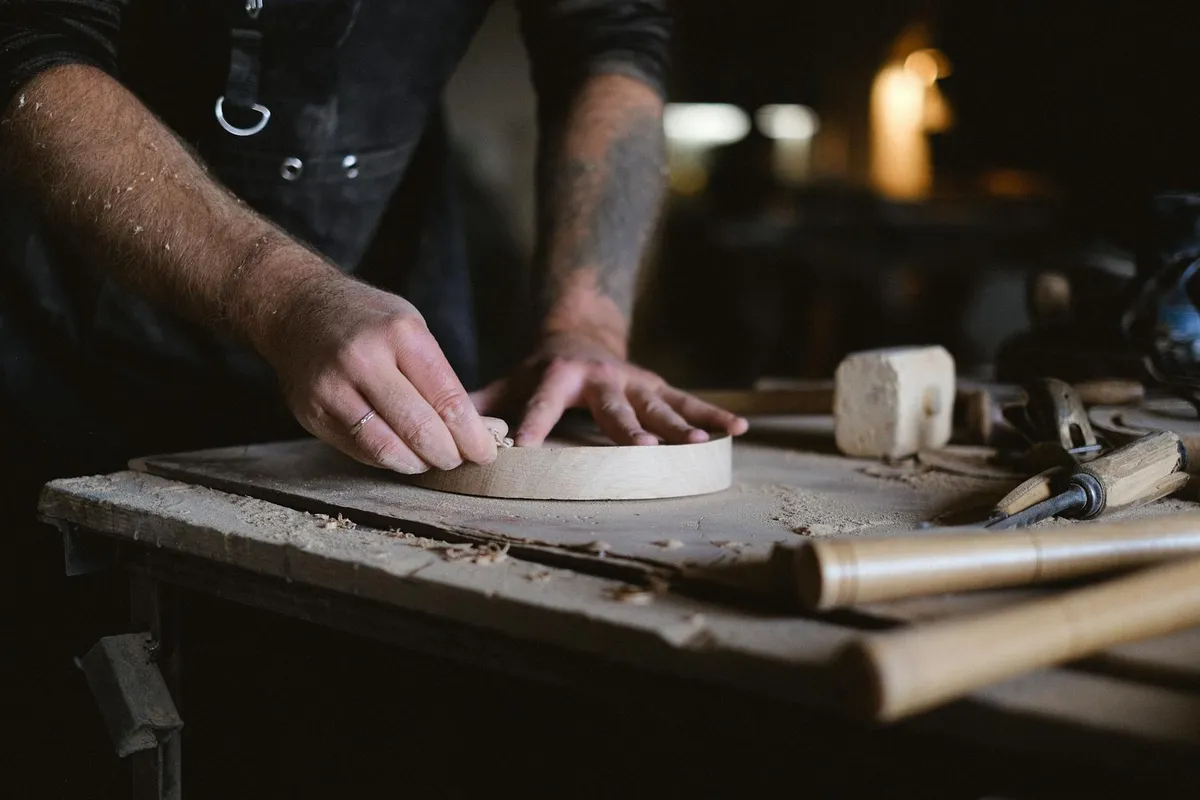
The slow-furniture movement, if we can still call it that, has been around long enough now to be assessed rather than introduced. It began, depending on whom you ask, somewhere in the early 2010s among a small group of makers in the United States and northern Europe who had decided, against the prevailing wind of the period, that the furniture business had gone wrong and that the way to set it right was to make pieces slowly, in small workshops, from solid wood, by hand, in the older traditions of the trade. The movement had its publications and its showrooms and its small celebrities, and it produced, over a decade, a body of work that is now part of the broader landscape of contemporary design.
The reason to write about it now, with a little distance, is that the slow-furniture movement got something correct that the broader design discourse has been slow to absorb. It was correct, more or less, about the things we choose to own, and the way the things we choose to own are quietly doing something to us. It was correct in a way that has been a little obscured by the obvious story about the movement, which was the story about craft and mass production. That was the surface argument. The deeper argument was about something else, and the deeper argument is worth restating.
The surface argument, and why it was not quite the point
The surface argument of the slow-furniture movement was about the moral superiority of handmade objects over factory-made objects. The story went something like this: the mass-furniture industry produces chairs and tables and case pieces that are made of pressed wood and stapled fabric, that begin to come apart within a few years, that cannot be repaired, that end up in landfills, and that produce, in aggregate, an enormous quantity of waste for very little durable benefit. The slow-furniture maker, by contrast, builds a chair from solid hardwood, joins it with mortise-and-tenon construction, finishes it with oil, and sells it at a price that reflects the labor involved. The chair will last several generations. The maker has been paid a living wage. The forest the wood came from has been managed sustainably. The chair is the better object on every measurable axis.
The surface argument was correct as far as it went. The handmade chair really is the better object on most of the measurable axes. The argument did not, on its own, persuade as many people as it should have, because the argument requires the customer to pay several times the price for a chair that performs the function of sitting in much the same way as the factory chair. The customer could be told about provenance and sustainability and craft, and the customer could agree with each individual point, and the customer could nevertheless decide that the factory chair was the rational purchase. This happened a great deal. The slow-furniture movement remained, for most of its first decade, a movement of the relatively affluent.
The reason the argument did not persuade more broadly is that the argument was not the strongest argument the movement had. The strongest argument was about something quieter, and the movement did not, in my reading of its publications, ever quite make the argument out loud.
The deeper argument, which is about the rooms we live in
The deeper argument is this: the objects we choose to keep in the rooms we live in are doing something to us, slowly and continuously, over the years that we live with them. The objects shape, in small and accumulated ways, how we feel in the rooms, how we move through them, how we sit and read and eat and rise. The objects are not neutral in their effects on the inhabitants. They produce a felt quality of life, in the room, that compounds over the years that the room is lived in.
This is not a romantic claim. It is, when stated in plain terms, almost obvious. The chair you sit in for an hour every evening to read is in physical contact with you for somewhere around three hundred and fifty hours a year. If you keep the chair for ten years, you have spent three thousand five hundred hours of your life in physical contact with it. The texture of the wood, the weight of the seat, the position of the armrest, the slight give of the back when you lean against it — these are not abstractions. They are sensory facts that are part of the substance of your evenings for a decade.
Multiply this across the table you eat at, the bed you sleep in, the shelf you take books down from, the desk you write at, the small lamps you turn on at dusk, and you have an environmental fact of considerable weight. The rooms are doing something to you. They are doing it whether you have chosen the objects carefully or not. The argument for the better object is, at bottom, an argument about the felt quality of the hours you will spend with it.
What the slow-furniture maker actually knows
The slow-furniture maker, in my experience of having visited a number of their workshops over the years, has a particular knowledge that does not show up directly in the discourse around the work. The maker knows what an oak chair feels like at the end of a long evening of sitting in it. The maker knows what the linseed-oil finish smells like when the late afternoon sun is on the wood. The maker knows the weight of a properly-balanced drawer when it slides out and the small, very specific pleasure of a drawer that is properly balanced.
These are pieces of knowledge that the maker has accumulated by spending a working life with the objects in question. They are difficult to communicate in advertising copy. They are difficult to evaluate in a showroom in the half hour you spend looking at the chair. They are the sort of knowledge that becomes available to the owner of the object only slowly, over the years of living with it, and the slow-furniture maker is in the position of having to ask the customer to accept a long-term claim on the basis of a short-term encounter.
This is a hard claim to make persuasively. The maker often falls back, in the materials they produce, on the easier claims about provenance and sustainability and craft. But the harder claim is the one that matters. The chair is good in a way that you will feel over the years. The table is good in a way that you will know across many meals. The bed is good in a way that you will discover only after many nights' sleep. The slow-furniture argument is, at bottom, an argument about duration.
The pieces I have lived with
I will say something brief about the pieces I have lived with that have produced the effect I have been describing. My desk is a slab of European oak, joined at the legs in a way that I do not entirely understand, made by a Belgian workshop a decade ago. I bought it when I should not have been able to afford it. I have written on it for ten years. It is the surface I have spent more of my working life on than any other object I own. The grain has darkened slightly over the years. The edges have a particular wear pattern where my forearms have rested for several thousand hours of writing. The desk is part of how my working life has felt, and the felt quality of the desk has been continuously good in a way that has compounded.
I have also owned a number of pieces that have not produced this effect — flatpack desks and rented-apartment armchairs and side tables that came and went — and the contrast is instructive. The pieces that have produced no felt quality have produced exactly that. The hours spent at them are not bad hours, exactly, but they are not hours that the room has helped to make.
Why this matters in 2026
It matters, I think, in 2026 in particular, because the room you live in has become, for most working adults, the room you spend the majority of your waking hours in. The hybrid working arrangement has not gone away. The home has absorbed functions that it did not previously absorb. The hours at the kitchen table or at the desk in the corner of the living room or at the chair by the window are more numerous than they were a decade ago. The case for living with objects of considered quality has therefore become stronger than it was at the start of the slow-furniture movement, because the dose has gone up.
The slow-furniture movement was, in this longer view, an early articulation of a position that has only become more correct with time. The objects in our rooms are doing something to us. The thing they do compounds over years. The better objects do the better thing. The case is not about morality and not about taste. It is about what we want the texture of our hours to be like, given that the hours are going to happen one way or another.
I am not in a position to recommend that anyone go out and replace their furniture, which would be both expensive and somewhat absurd. I am in a position to suggest that, the next time you have occasion to acquire a piece of furniture that you will live with for a long time, you might consider acquiring it from one of the people who is still making such things slowly. The piece will be expensive. It will be better than what you could buy more cheaply. It will be better in a way that you will know only after several years, when you find that the hours spent with it have been continuously good in a way that you had not previously thought possible from a chair.