I would like, in this piece, to mount a careful defence of the long lunch. It is a form that has been more or less driven out, over the past two decades, by the prevailing productivity culture of the English-speaking cities, and the loss is worth naming because the form is one of the small pieces of European civilization that has held against considerable opposition and is still available, in certain places, to anyone who chooses to use it.
I should say first what I mean by the long lunch, because the term has been blurred. I do not mean a lunch that runs longer than scheduled because the conversation has been good. That is a fine thing. I mean a meal that has been planned at the outset to last for two and a half hours, on a weekday, somewhere between roughly one in the afternoon and half past three, taken in a restaurant or at a table at home, with people whose company has been chosen, with several courses and at least one bottle of wine between three people, with no particular agenda and no expectation of returning to work afterwards in any productive capacity. The long lunch is, in its proper form, a deliberate occupation of the middle of the working day.
What the long lunch is for
The long lunch is for several things, which I will name in the order of their importance.
It is for the conversation. The middle of the day is a time at which adult conversation between adults proceeds differently than it does at any other hour. The morning is too tied to the rhythms of beginning. The evening is too tied to the rhythms of ending. The middle of the day, taken at a table without a clock, is the hour at which people who have known one another for some time are able to speak to one another with the particular leisureliness that produces the better sort of talk. The long lunch makes this hour available on a routine basis.
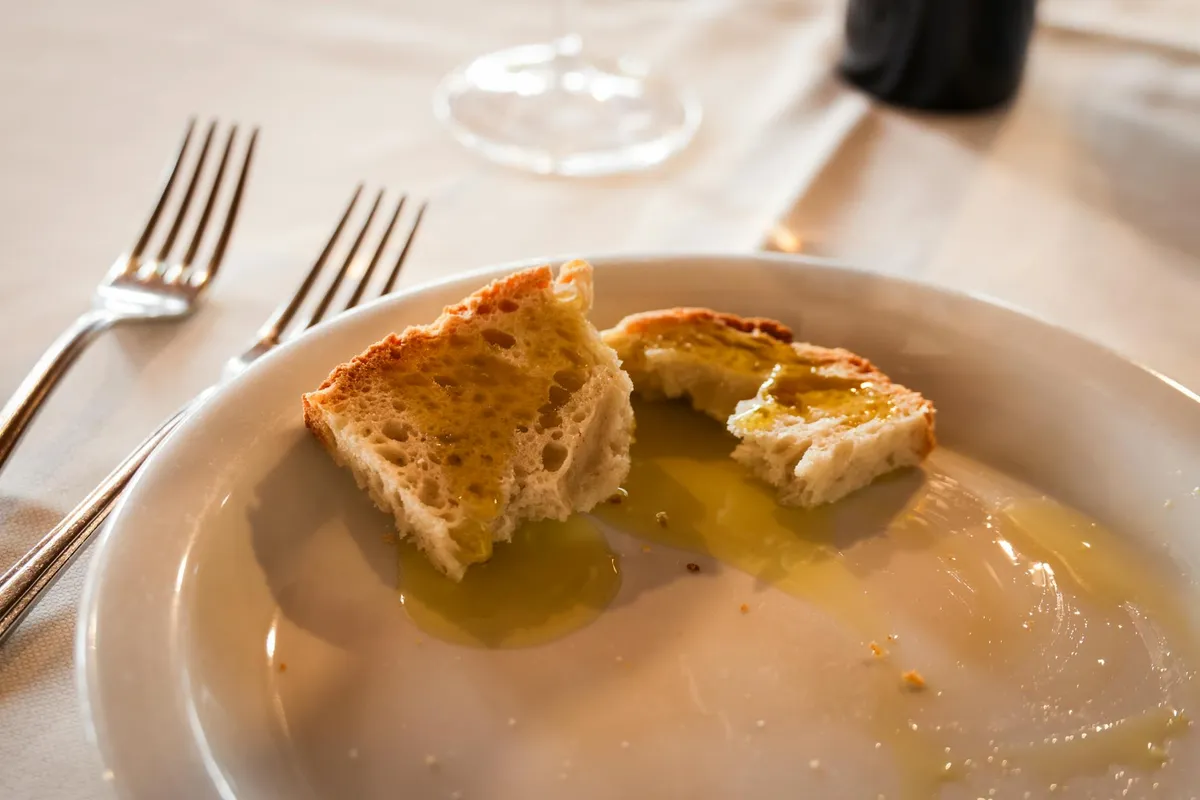
It is also for the meal itself, which I do not need to defend at length, because the case for eating well is one of the few cases in this category that does not require defending. The meal at the long lunch is meant to be the principal meal of the day. It is taken at the hour at which the body is most receptive to it. The courses can be allowed to follow one another with the deliberation that the cooking deserves. The wine can be drunk with the attention that the wine has been paid for.
It is also for the small dignity of refusing, on at least one regular occasion, the proposition that the entire working day must be a continuous performance of productive output. The long lunch is among the older forms by which working people have asserted, against the demands of whatever industry they happen to work in, that they are also persons whose ordinary lives are not subordinate to the work. The assertion has been quiet, but it has been continuous, and the long lunch has been one of its principal sites.
Why the long lunch has gone away
The long lunch has gone away in the cities I am most familiar with for reasons that I will not pretend are mysterious. The productivity culture of the past two decades, which has its own merits in narrow terms but which has been applied past the point of reason, has made the middle-of-the-day meal an embarrassment in most professional contexts. The expectation has become that lunch is a thing one consumes at the desk in fifteen minutes from a packaged container, that any extended lunch is a sign of poor time management, that the worker who takes a long lunch is the worker who has not understood the seriousness of the work.
The expectation is wrong, but it has been thoroughly internalized, and most of the people I know in professional life would feel, if they were to leave the office at one for a meal that returned them at half past three, that they had done something they were not supposed to do. The feeling is not produced by any specific instruction. It is produced by the cumulative pressure of a culture that has decided, against the experience of most of the working civilizations that have preceded it, that the middle of the day is for work and that the meal is an interruption.
Where the long lunch survives
The long lunch survives, in 2026, in several places that I have had occasion to observe with some care. It survives in Portugal, where the practice has not been driven out and where one can, on most weekdays in most neighborhoods of Lisbon or Porto, find tables of three or four locals at lunch at half past two without anyone treating the arrangement as exceptional. It survives in parts of Italy and Spain, with regional variation. It survives, in attenuated form, in France. It survives among certain professional cohorts in the older European cities — among art-world people, among the wine trade, among writers and editors, among the small professions that have negotiated their working hours on their own terms.
It survives, also, among older men in the English-speaking cities who came up in a period in which the long lunch was a recognized form, and who have continued the practice with the friends and colleagues of their generation through the entire period of its decline elsewhere. The lunches of older men of this sort are one of the small reliable pleasures of the city. I have been to a number of them, and I will say without embarrassment that they have been among the best meals I have eaten in any year. The form is not extinct. It is held, in certain quarters, by people who never agreed to its abandonment.
What the long lunch produces
The long lunch produces, in the people who participate in it regularly, an effect that is difficult to describe in productivity terms and that is therefore difficult to argue for in the language that the productivity culture has imposed. The effect is roughly this: the participants are, after a long lunch, calmer, more rested, more available to one another, and more competent at the work they will eventually do later in the afternoon or the following day, than they would have been had they spent the same hours at their desks. This is not a defensive claim about productivity. It is an observation about the human animal, which is not particularly suited to continuous productive output and which performs better at the work over longer time horizons when the work is interrupted by adequate periods of unhurried company at the table.
The effect compounds. People who lunch together regularly develop, over time, a particular quality of relationship that is not produced by drinks or by dinner or by working together. The long-lunch relationship is the relationship of people who have spent many slow hours in one another's company without any specific purpose, and the particular trust and ease that this produces is among the more useful things that two adults can develop with one another. The long lunch is, among other things, the principal site at which the better sort of professional friendship is conducted.
How to take a long lunch in 2026
I will close with a small practical suggestion. The long lunch in 2026 requires a degree of deliberateness that it did not require in the periods when it was a recognized cultural form. You will need to ask one or two friends in advance. You will need to choose a restaurant that will not pressure you to leave the table. You will need to give yourself permission, in the face of whatever working culture you operate within, to be absent from the desk for the relevant hours.
The reservation should be made for one o'clock or slightly later. The restaurant should be one at which the waiters understand the form — which, in the cities I have lived in, means most often a Portuguese tasca, an Italian trattoria of the older sort, a French bistrot, or a small neighborhood restaurant whose owners have decided to honor the form despite the surrounding pressure. The order should include at least three courses. The wine should be drunk slowly. The conversation should be allowed to wander.
At half past three, you will rise from the table with the small surprise of having spent an afternoon at lunch and having done nothing else. The afternoon will appear to you, in retrospect, as one of the best afternoons of the month. The work to which you will eventually return will be the same work it would have been. The hours of unhurried company at the table will have been a small and definite addition to your ordinary life, and the addition will compound, across the years that you continue the practice, into something that the productivity culture cannot account for and that the people who have continued the practice have always understood.